Results
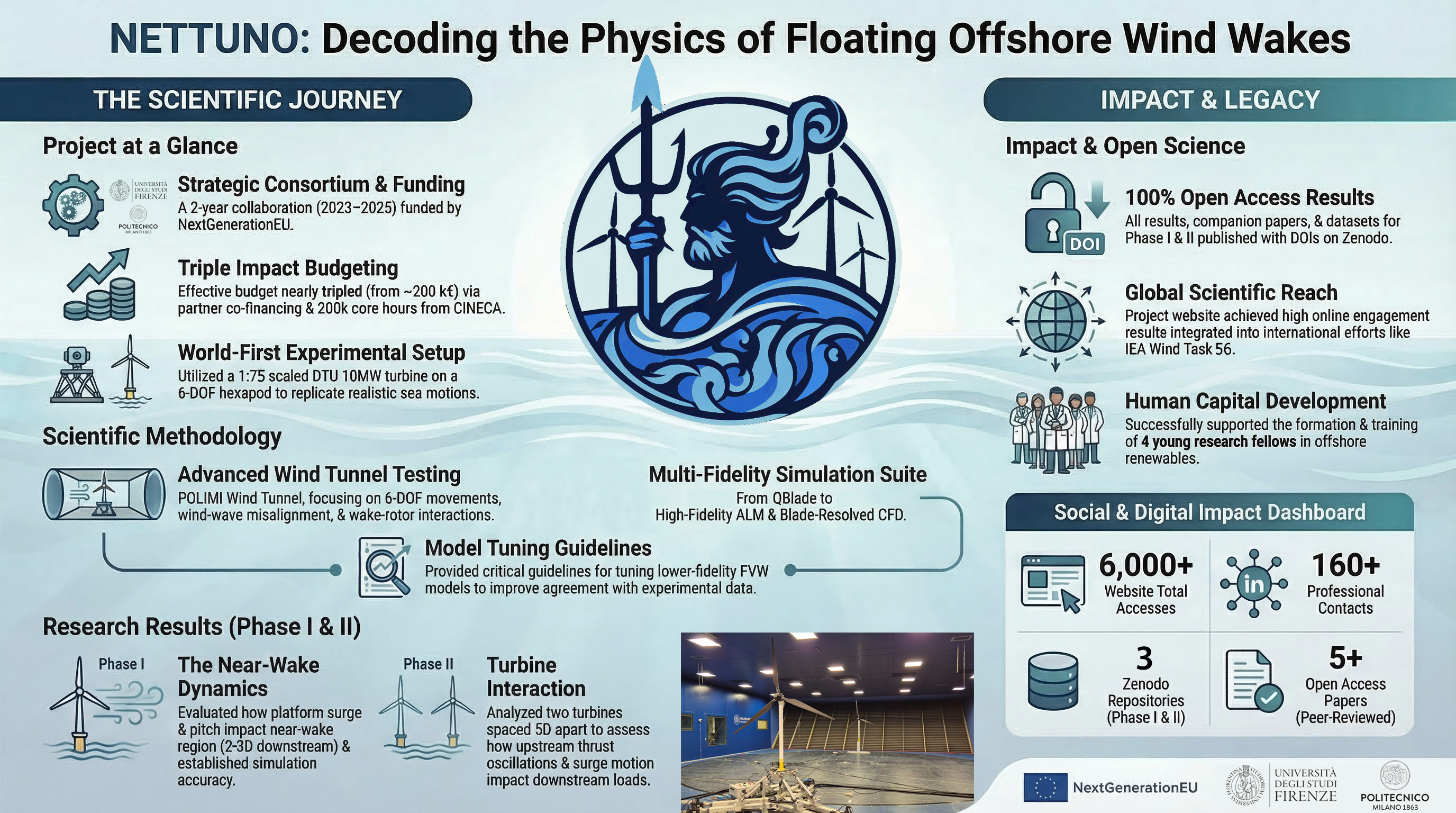
The NETTUNO project has successfully concluded its research program, achieving all scientific and technical objectives regarding the characterization of unsteady wake dynamics and rotor-wake interactions in floating offshore wind turbines (FOWTs).
Technical Summary of Results
Experimental Campaign Achievements
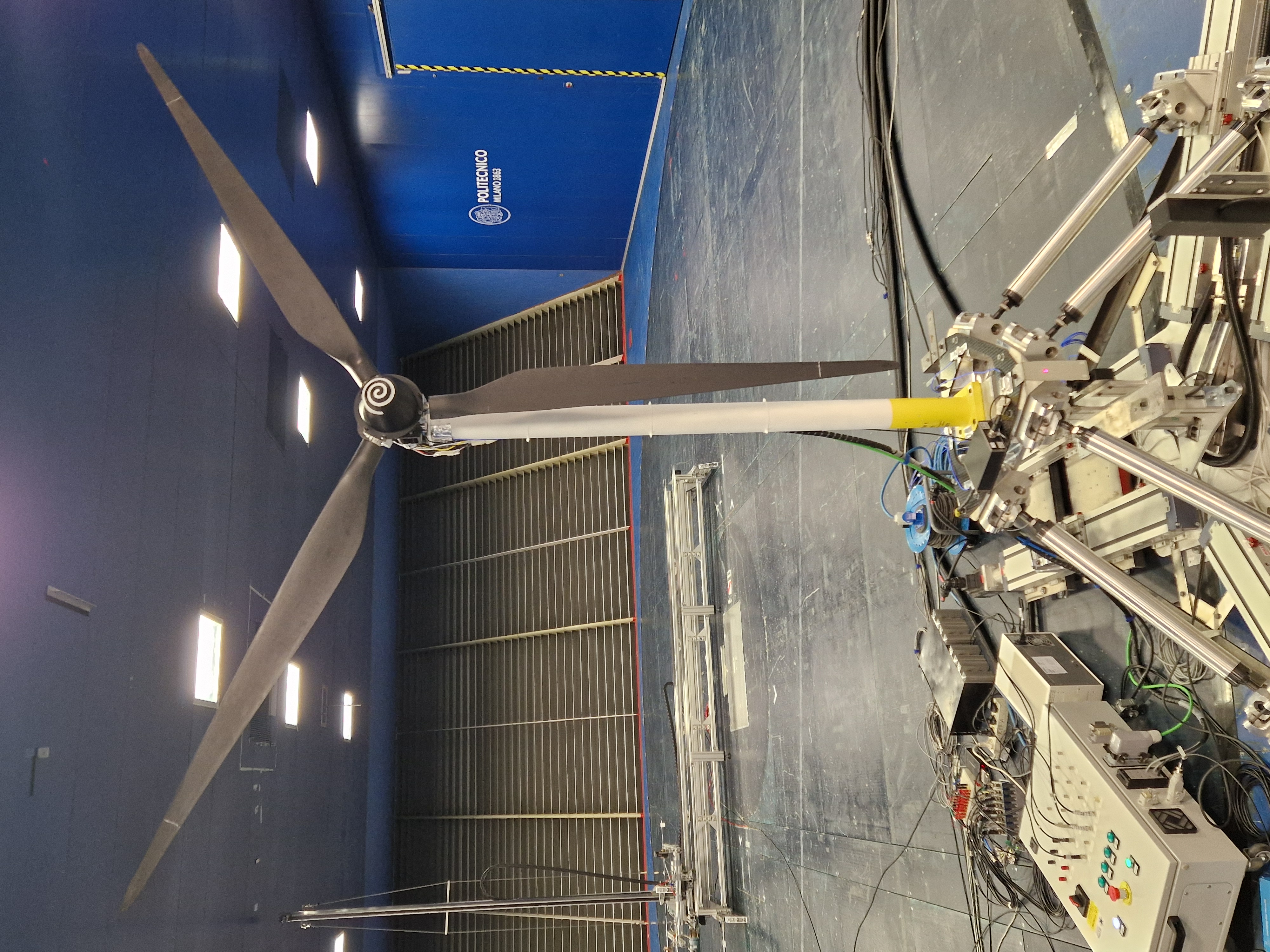
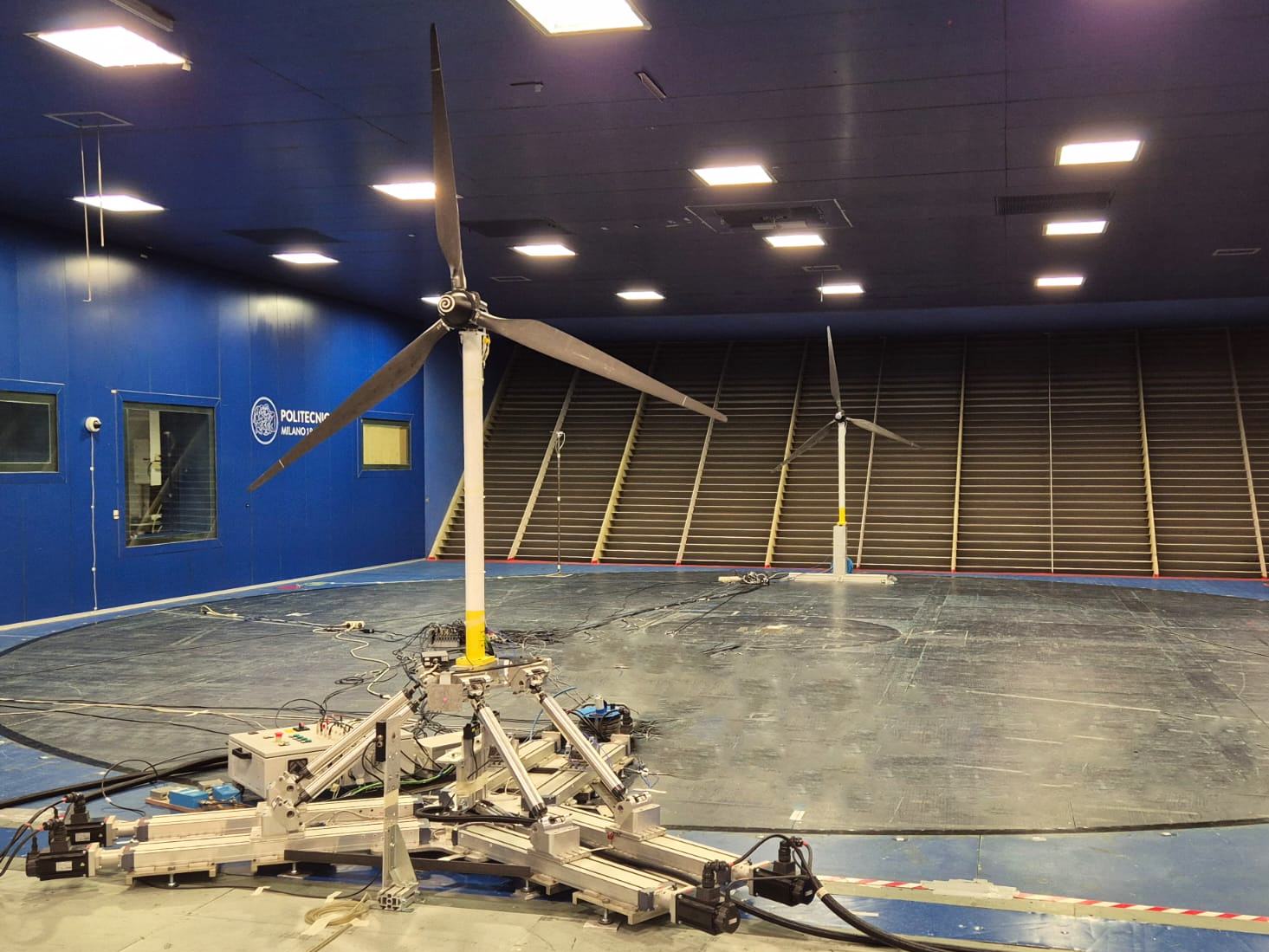
The project generated a high-quality experimental database using 1:75 scaled models of the DTU 10 MW turbine at Politecnico di Milano's Boundary Layer Wind Tunnel.
- Single Turbine Analysis (Round I): We have characterized the wake of a turbine subjected to 6-DOF motions, introducing for the first time also the analysis of more realistic platform motions with respect to usually-explored harmonic ones, e.g., "wind-wave" misalignment, yawed operation, realistic uncoherent platform motion, etc. A selection of the most significant experimental results from Round I is reported open access here: https://zenodo.org/records/13994980
- Tandem Turbine Interaction (Round II): Direct aerodynamic load measurements were acquired on a downstream rotor, exactly equal to that tested during round I, positioned downstream at spacings of 3D, 4D, and 5D. We tested the rotors both perfectly aligned and with the downstream one staggered by one radius. Moreover, we also tested different maneuvering of the upstream one, like dynamic pitching. Results highlighted relative power increases of up to 26% for the downstream turbine in specific misaligned or yawed configurations, providing critical data for wind farm layout optimization. A selection of the most significant experimental results from Round II is reported open access here: https://zenodo.org/records/15582187
Multi-Fidelity Numerical Modeling
A synergic numerical framework was developed to benchmark different fidelity levels.
- Engineering Methods (FVW): Lifting-line Free-Vortex Wake simulations in QBlade were calibrated against experimental data. The project established critical guidelines for tuning vortex filament parameters (initial core radius and turbulent viscosity) to improve wake deficit predictions.
- High-Fidelity Simulations (ALM-LES): Actuator Line Method (ALM) Large-Eddy Simulations (LES) were performed to capture the interaction between free-stream turbulence and wake shear layers. This led to the discovery that while platform motion anticipates wake breakdown in laminar flows, atmospheric turbulence dominates the recovery process in realistic offshore conditions.
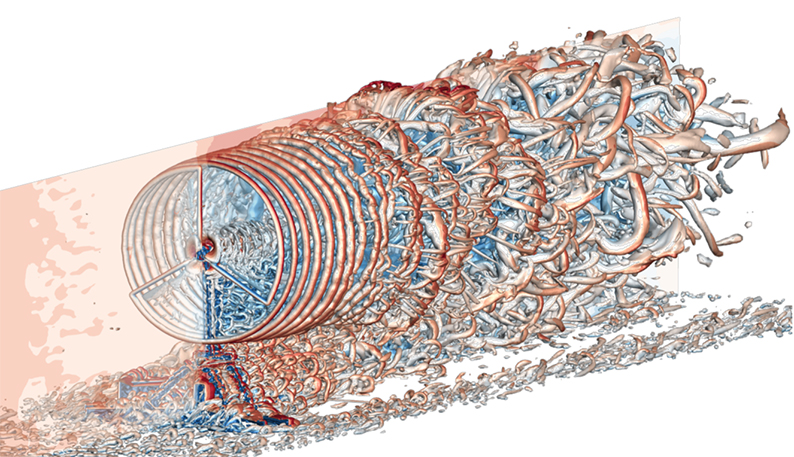
- Blade-Resolved CFD: Highly refined URANS simulations reconstructed 3D aerodynamic phenomena (such as spanwise load oscillations and effective angle of attack), providing a benchmark for lower-fidelity tools that cannot be obtained experimentally.
A selection of numerical results of use for benchmarking is reported open access at DOI:
10.5281/zenodo.19002760
List of Produced Scientific Papers
The project's findings have been disseminated through high-impact, open-access conference and journals papers. In particular, the most significant journal ones are reported below:
- Cioni, S., et al. (2025). "Blade-resolved CFD analysis of a floating wind turbine: new insights on unsteady aerodynamics, loads, and wake." Ocean Engineering, DOI: 10.1016/j.oceaneng.2025.122746.
- Pagamonci, L., et al. (2025). "How does turbulence affect wake development in floating wind turbines? Some insights from comparative large-eddy simulations and wind tunnel experiments." Wind Energy Science, DOI: 10.5194/wes-10-1707-2025.
- Fontanella, A., et al. (2025). "Wake development in floating wind turbines: new insights and an open dataset from wind tunnel experiments." Wind Energy Science, DOI: 10.5194/wes-10-1369-2025.
- Cioni, S., et al. (2026). "How accurately do engineering methods capture floating wind turbine performance and wake? A multi-fidelity perspective." Wind Energy Science, DOI: 10.5194/wes-11-795-2026.
- Fontanella, A., et al. (2025). "Experimental investigation of the effects of floating wind turbine motion on a downstream turbine performance and loads." Wind Energy Science Discussions, DOI: 10.5194/wes-2025-106.